
The Challenge
To continue operations, charter schools authorized in California must be re-authorized by their
local school district every 5 years. Along with documentation of students’ academic indicators showing equal or greater performance to traditional public schools in the area, school must also demonstrate community/parent support. The challenge is the applying schools must present itself to the Board’s publicly elected members for a vote at a public hearing. This can give school board members, in our highly charged political environment for charters, an opportunity to raise questions about the efficacy of charter education, and to even vote no to a charter renewal. Amendments to the California Charter Law, to take effect in 2020, create more challenges to charter schools. While high performing schools will get less scrutiny and up to 7 years approval, the majority of charter schools will now have to also show how they are not duplicating existing public school programs and meet the state’s multiple measures of performance on the color-coded California School Dashboard.
In addition, charter schools face the challenge of educating and continuing enthusiastic parent interest to stand up for their school and articulate the case for the school’s renewal.
The Approach
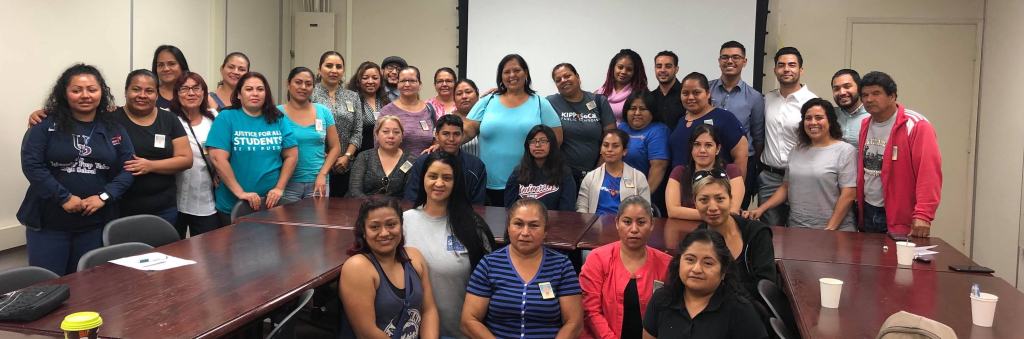
Our approach starts with building relationships with parents through a listening campaign, engaging parents and families through education on charter polity, and activating parents to successfully organize others and take public action to support their school.
Building Relationships. Relationships are formed by taking the time to have a conversation with someone. We set up one-to-one meetings with parents to listen to their family story educating their kids, sharing our own story becoming education advocates, sharing what is at stake for them, extending the school’s request for the upcoming renewal, and inviting parent to join a team. These conversations help parents to think more about the value of a quality education for their children and decide to commit to working with other parents. To facilitate muliple conversations, we will schedule meetings with parents before or after drop off/pick up, usually lasting 15-20 minutes. Under COVID conditions, these meetings will need creativity and persistence, but are no less important.
Engaging Parents. Using a portion of the agenda of previously scheduled parent meetings, we present a slide training to share with parents:
- How state law governs charters and how school districts manage charters,
- Why parent and community engagement holds the political system accountable,
- What is at stake for the school in the upcoming school application for renewal,
- The urgency of NOW to organize and take action with the school leadership.
Parents then sign up and prepare with school staff a campaign plan and timetable leading up to the school district presentation and vote.
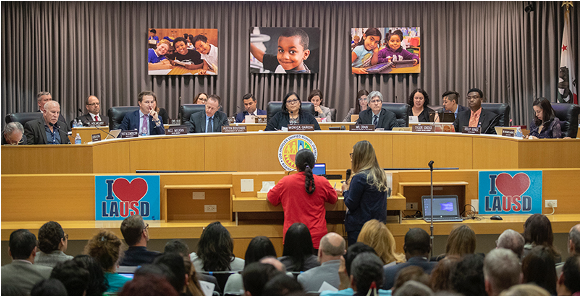
Taking Public Action. The strategy is to educate/mobilize more parents to support the school and to engage the decision makers (the school’s district board member and the other voting board members) to learn about the high-quality education the school is providing, and the extensive community support the school has. These actions include letter writing, petition signing, district visits with school board members and/or calls, ensuring large turnout of parents at the hearing, and excellent short public testimonies by parents.
Some interesting tactics schools in Los Angeles used to win school board approval include –
- James Jordan Middle School got 300 parent signatures at drop off and pick up.
- When confronted with their local school board member plan to vote NO, WISH charter parents held sit down meetings or calls with every other school board member.
- Fifty parents from schools in LAUSD Board District 2, met collectively with their district board member, Monica Garcia, to get her commitment to protect charter schools and vote for renewal for each school.
The Result
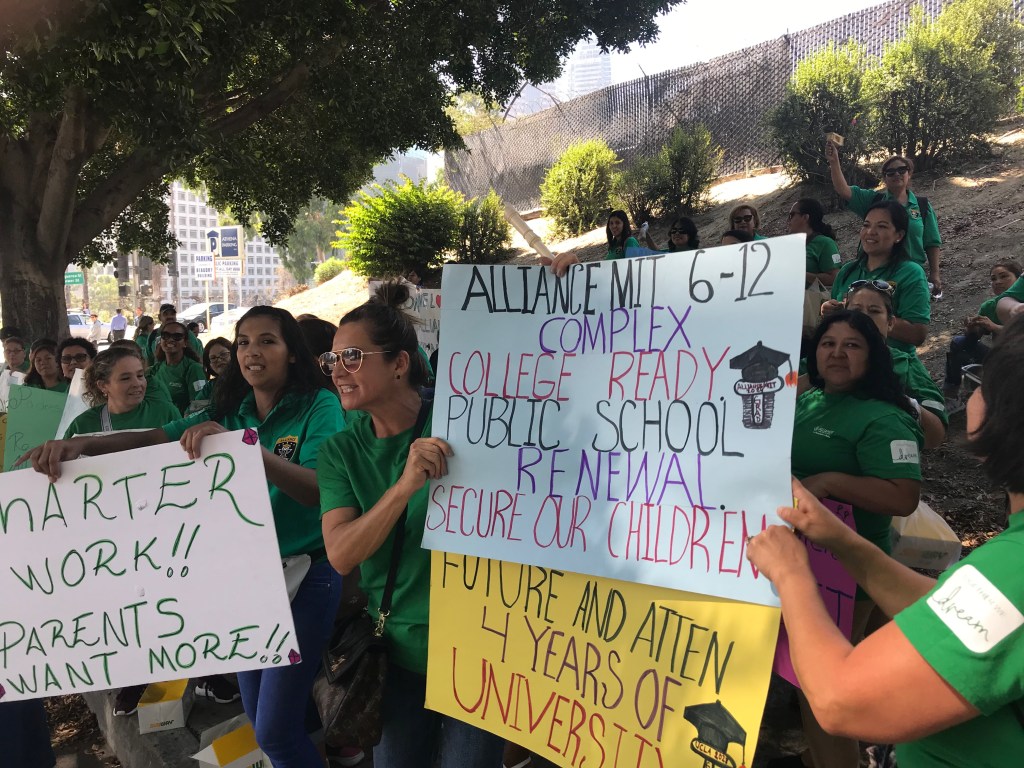
All of the schools we supported were successful in their renewal. In many cases, the strong presentation of academic data presented by the school,strengthened the board’s support. The parents and community advocacy, however, took the politics out of the discussion and showed the broad public support traditional schools do not often show. We also were careful to only commit to assisting a charter that met state academic, management, and fiscal responsibility requirements.
 sunshineadvocacy.com