Category: Uncategorized
Peter Phillips: Getting elected is not governing
TallahasseeDemocrat
You did a great job educating the public about your opponents’ shortcomings, but do we know enough about you? Or maybe the real question is, do you know enough about us? Florida and the country seem caught in an endless ideological debate about the role of government, but seldom get to the honest debate about the consequences of policy making. This is governing. It requires hard work on your side and your constituents’ side to understand the issues we face and debate them to create good policy.
When both parties work together and exhibit true bi-partisanship, meaningful legislation can pass, such as the bill to extend benefits to foster children through their college years. This occurred during the last session, and Florida was first in the nation to accomplish this. But too often major issues like health care expansion, housing policy (use of dedicated housing funds for general expenditures), and environment get caught in an ideological debate. Good governing does not always mean legislators following orders from their party leaders. Rather, good governing means listening to all your constituents and shaping your party’s platform accordingly.
Here are some thoughts on good practices for a “listening” legislator. Rather than simply start a new fundraising campaign for the next election, consider these questions to evaluate your responsibility to effectively govern. Are you in relationship with constituents who were not part of your campaign? Do you reach out to community institutions, churches, civil rights organizations, nonprofit service providers, small businesses, and unions to build a relationship and understand their priorities?
People different from you don’t necessarily have different values. As legislation moves forward, do you meet with both sides to better understand the issue? Are you visible and accessible in your district? Are you teaching, educating your constituents in how to engage in state policy? Are you opening opportunities for more constituents to understand how state policy affects their lives and thus building greater voter participation? Are you learning from your constituents?
This, of course, is a two way street. What are constituents doing to hold their legislators accountable? Our low perception of politicians does not excuse us from engaging (between elections) on issues that affect our quality of life. In fact, shame on us if we abstain from a debate over issues that personally impact us. Here are some thoughts on good practices for the “engaged” Florida constituent. Consider these questions to evaluate your responsibility as a citizen.
Do you personally know your state legislator? Do you make an effort to follow debate on issues that affect you? Have you connected with organizations that represent your concerns? Have you ever told your story about how a public policy influences your personal life? Would you reach out to others who are concerned about the same issue in order to work together? Will you give up some personal time, or take off work, to go to Tallahassee, tell your story, and hold your representative accountable?
The gap between those who govern and the constituents impacted by their decisions is huge. Closing the gap will take hard work and courageous risk taking. We can continue the current course of money dominated highly polarizing politics or we can recognize that there is honest currency of a different nature in delivering legislation that has real impact on Floridians- particularly those often left out of the political process. Let’s get to work Florida!
Peter Phillips is the founder of Sunshine Advocacy, a consulting firm to expand advocacy and civic engagement in Florida. Contact him at pphillips@sunshineadvocacy.com.
Central Florida Latinos Speak Out on “Health Care for All”

Hispanic Health Initiative’s “Conversando Sobre Tu Salud” campaign for Central Florida Health Care for All launched this summer with a press conference and three town hall meetings in Orange and Osceola Counties. More than 120 people attended actions in July and August to educate Latino leaders about the upcoming ACA health insurance enrollment period and the gap in coverage to over 200,000 Latinos and 800,000 uninsured in Florida. Sponsoring organizations included the Puerto Rico Federal Affairs Administration, Florida CHAIN, NCLR, and Hispanic Health Initiatives.
Meetings in Poinciana, Englewood, and Buena Ventura Lakes (all predominantly Latino communities) were attended by families and civic leaders largely unaware of the large percentage of uninsured and Florida’s decision not extend health care insurance to nearly 1 million people living below 138% of poverty. Betsy Franceshini, Puerto Rico of the Office of Puerto Rico Government Affairs, “We want to see Medicaid expanded in
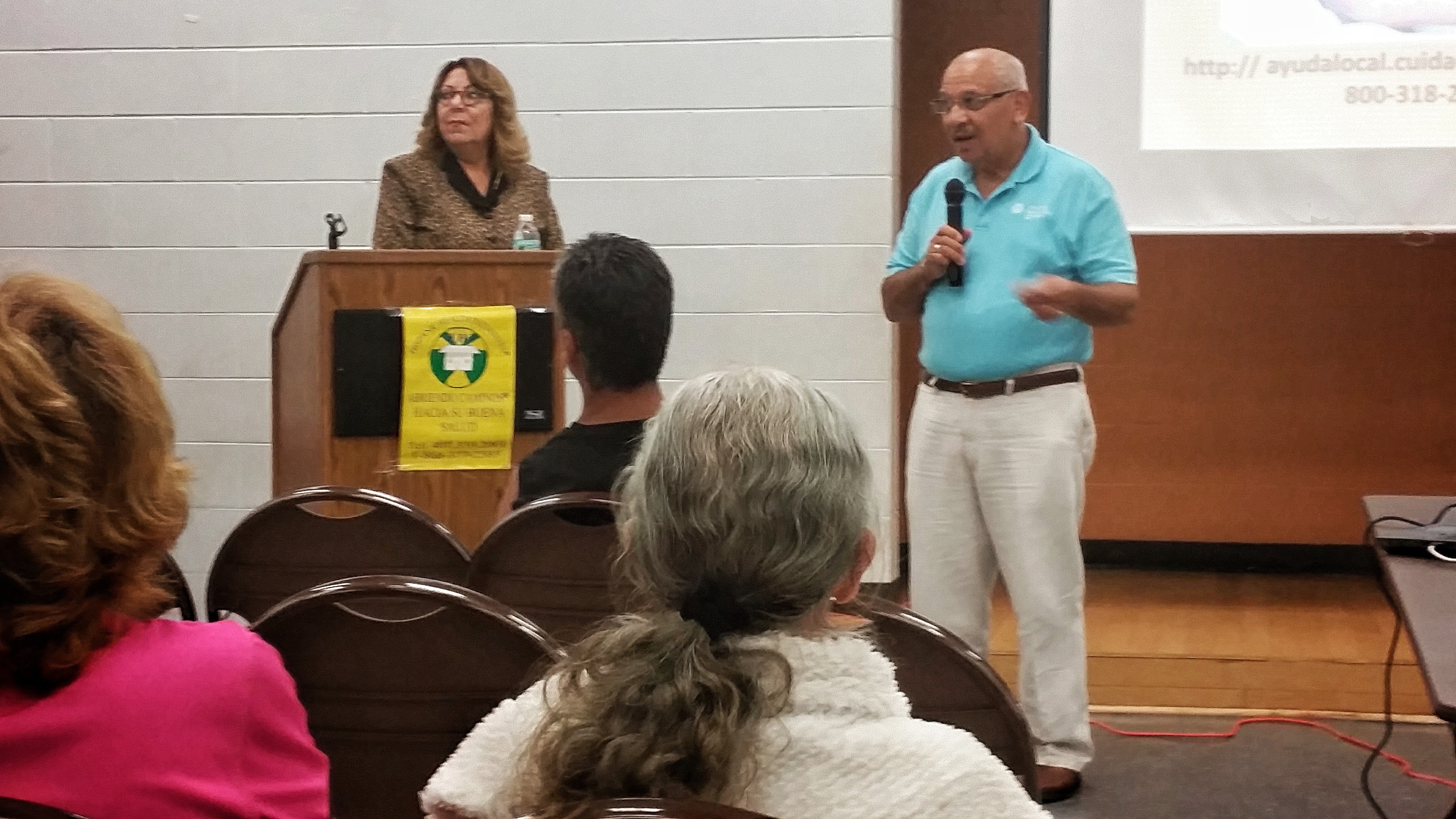
Florida as 30% of Latinos and 42% of single men do not have health insurance. They work in the service industry often for minimum wage and cannot afford to health insurance”.
Thirty leaders from community service organizations and local churches planned the events and will lead in organizing meetings with legislators around expanding health care coverage and planning health care insurance enrollment events when this year’s enrollment period starts November.
Medicaid Expansion in Florida – A Latino Perspective

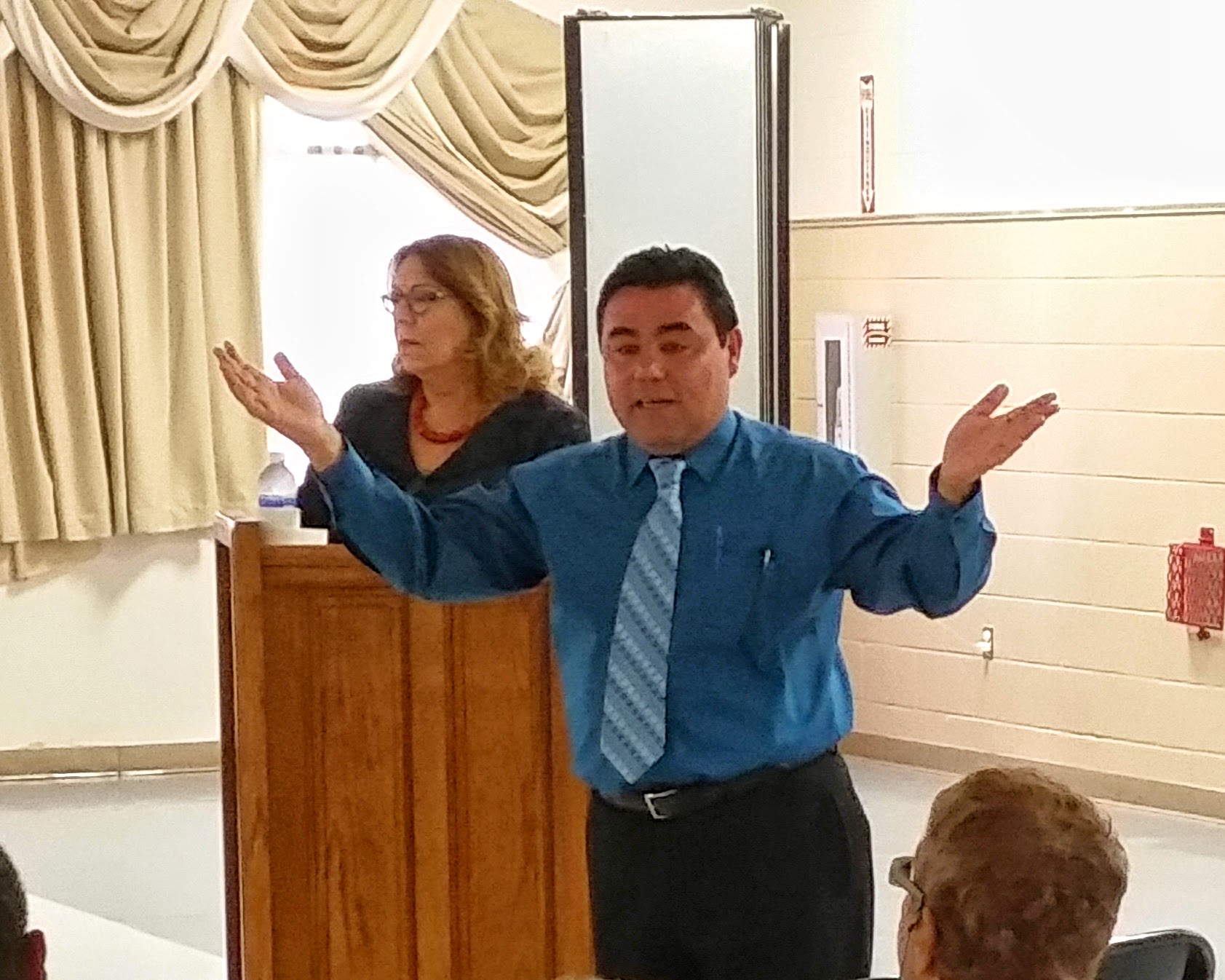
NCLR recently released its report on the impact on Latinos of the failure of Florida to expand Medicaid. Joining NCLR for a discussion and press conference was Planned Parenthood, Florida CHAIN, Mi Familia Vota, WellCare, Hispanic Health Initiative, Hispanic Chamber of Commerce of Metro Orlando, Rep. Torres, Rep. Rangel, and Sen. Soto. The case for Medicaid expansion will be made as we go into this fall’s election and Sunshine Advocacy looks forward to being a part of this campaign.
The current failure to expand Medicaid in Florida under the Aīordable Care Act (ACA) has had a disparate, adverse impact on the health of the Latinos community:
- According to the Kaiser Family Foundation, nearly 200,000 Hispanics are in the coverage gap as a result of the state’s failure to expand Medicaid.
- Latinos are disproportionately represented among those in the Medicaid coverage gap. While Hispanics compose 23% of Florida’s population, they represent 26% of Floridians in the coverage gap.
- Thirty-six percent of nonelderly Latinos in Florida are uninsured—the third-highest rate of uninsured Latinos of any state in the country.
- Lack of insurance and access to preventive care exacerbates health disparities for Hispanics, who are more likely to be confronted with diseases that require routine health management such as diabetes, kidney disease, and HIV/AIDS.
In addition to reducing health disparities for Hispanics, expanding Medicaid carries broader socioeconomic benefits for Latinos. Medicaid expansion has the potential to:
- Improve the financial security of Latinos and other low-income Floridians by reducing the incidence of medical bankruptcies.
- Create up to 121,000 new jobs and generate $71 billion in economic activity during the Įrst ten years. Latino workers in particular, who are disproportionately clustered in jobs that pay by the hour and are more vulnerable to income loss due to their own illness or that of a family member, stand to benefit.
Source: U.S. Census Bureau, The Henry J. Kaiser Family Foundation
The Dozier School for Boys – Interfaith Commission for Florida’s Children and Youth Launched
On Friday, May 16, religious leaders met with NAACP representatives and members of the Florida CFO’s office to receive a first-hand report from USF Professors Erin Kimmerle and Antoinette Jackson on their forensic and oral history research into the deaths of boys under state care at the youth facility outside Marianna, FL. In a two hour discussion following the briefing, the group agreed to form the Interfaith Commission for Florida’s Children and Youth and to draft a letter to Governor Scott asking that the disposition or sale of any of the 1400 acres on which the youth facility was situated be put on hold.
While the full scope of the commission will be determined as it takes up this work, the presenting agenda includes: extending due regard and demoralization of the youth whose bodies have been recovered, engaging in community conversations that address how we should remember and care for Florida’s children, and considering recommendations as to the historic preservation of significant structures on the site.
Most of the children who were killed while under state care died before 1957. By then a second school had been opened in Okeechobee. In 1968, the school was desegregated and renamed the Arthur G. Dozier School for Boys. The youth facility was closed in 2011 for financial reasons after extensive publicity around a federal investigation into allegations of abuse.
Within Jackson County there is an economic desire to foreclose research and return at least a portion of the site to development. In particular, there is a state of the art maximum security facility on the site that could become a private youth detention center. The prospect of this happening quickly before all remains of those who have been found have been identified was of deep concern to those at the meeting. There are still many unanswered questions for the final report to address.
Florida’s youth facility was not a rogue institution. Children were sent there from across the state and even from other states. Its history reflects the norm for state practices, from convict leasing and peonage up to private prisons of today. Those shifting norms included racial violence, segregation, and punishments that dehumanize children. Many, if not most, of the deaths of children at the facility were not accidental. The church played a role at the facilities, providing both White and Black ministers on site.
The Interfaith Commission for Florida’s Children and Youth will take seriously how faith was co-opted to support the cultural norms of the day. Our work is not about assigning blame. It is about healing. As we remember the past afresh, may we be inspired to not repeat it in the future. As one state official said, ‘These are Florida’s children. These are our children.” Let us do right by their memory.
We all embrace the well-being of our children. Let us work together so that Florida truly embraces all of its children. For more information and how to join the Commission, contact Rev. Russell Meyer, rmeyer@floridachurches.org
Resources:
Florida Prosperity Network

I am excited to be speaking tomorrow at the Florida Prosperity Partnership’s Sixth Annual State Training Conference in Orlando. The Florida Prosperity Partnership (FPP) is a statewide collaboration dedicated to improving the financial stability for low-to-moderate income Floridians. Established in the fall of 2008, the FPP includes more than 160 partner organizations from all sectors of Florida. FPP’s mission is to engage, through a statewide collaboration of organizations that are holistically focused, in providing
life-enhancing services to Floridians.
I will be speaking on Grassroots Organizing. If you are attending, come by and say hello.
RAISE Florida Network releasing strategies for the Payday Lending Reform Campaign for 2014.

RAISE Florida Network is releasing research findings and an advocacy toolkit to provide important tools for members, stakeholders and partners. Payday lending for more than 2 million lower income families in Florida becomes a debt trap.
- Payday loans are small, unsecured and short-term loans. They are high interest rate loans that are usually repaid on the borrower’s next payday. The average value of a typical two-week payday loan is around $387 in Florida.
- The annual percentage rate for a two-week payday loan of $387 with a $41.55 fee is about 290 percent.
- Payday lending forces customers to become repeat borrowers because of high fees charged with each loan. In fact, 39% of repeat borrowers take out another loan one day after paying off their existing loan and most, 86%, take an another loan within two weeks of their previous loan.
- Most of the payday customers are low- to moderate-income households with an income range of $15,000-$50,000.
- In Florida, an average borrower receives a payday loan about nine times a year (Veritec, 2012).
In Florida alone, payday lending is a $2.85 billion industry with approximately 2.4 million customers (Veritec Solutions 2012). However, unlike most business, Florida’s payday lending industry often traps borrowers in a cycle of debt and strips more than $244 million of Florida’s wealth. With more than 1,600 stores the payday lending industry makes 7.2 million loans in 2012 alone.
Over the next few weeks the RAISE Florida Network is holding regional meetings in Jacksonville, Pensacola, Miami, and Orlando to educate community leaders and gather stories on the impact of payday loans on working families. For more information go to: RAISE Florida Network
Immigrant Children Health Care Bill Approved Out of Senate Health Policy Committee
On a vote of 7-2 the Senate Health Policy Committee just approved SB282 expanding children’s health care to Florida lawfully residing immigrant children and ending the 5 year wait for children to get KidCare coverage. Congratulations to families and advocates that worked hard to get the bill through Committee. The bill next goes to Senate Health Appropriations. If passed, the 5 year wait will be eliminated for 25,000 eligible immigrant children.
On the House side companion bill HB7 is waiting to be put on agenda for House Health Appropriations Committee Chair Rep. Matt Hudson. Please urge Rep Hudson to agenda the bill. Call (850) 717-5080 and ask Rep. Hudson to let the bill have a vote.
Guest Column: Florida should give health coverage to all of its children | members.jacksonville.com
Guest Column: Florida should give health coverage to all of its children | members.jacksonville.com.
One legislative issue should warrant every Floridian’s attention. It is extending health care access to more of our state’s children.
A bit of history: In 2009, states were given the option to waive a five-year waiting period that delays lawfully-residing immigrant children from accessing their state’s Children’s Health Insurance Program (CHIP). In simpler terms, a newborn child who moves to Florida today — and is fully eligible for the state’s subsidized health insurance program — may be unable to see a doctor until he or she is entering kindergarten.
Since 2009, 26 states have opted to waive this five-year waiting period. Florida, however, has not.
Instead, an estimated 25,555 of our children continue to wait — often forgoing the medical care they need to stay healthy. During these five years, these children are less likely to see a doctor or a pediatrician, far more likely to have unmet medical needs and significantly more likely to miss multiple days of school.
Children who do not have access to a medical home can face far more difficulties in school and in life.
IMPORTANT BILLS
Two bills — HB 7 by Rep. Jose Felix Diaz and SB 282 by Sen. Rene Garcia — would help change this and would do so affordably.
The most recent analysis shows that extending Florida KidCare eligibility to these 25,555 children would cost Florida an estimated $19.5 million — just 0.0003 percent of the state’s total budget — while helping save money by reducing the costs associated with uncompensated care, expensive emergency room visits and time lost from work by parents who must care for their sick children.
But the importance of this policy rests not in how much money it will save but in the people who will be positively impacted by its passage and implementation.
It rests in the parents and caregivers of our state who must deal each and every day with the challenges, preoccupations and anxieties that come from having children who are uninsured.
FAMILIES LEFT IN LIMBO
Parents like Manuel Posas of Tampa and Esther Betancourt of Fort Pierce who are simply unable to afford private health insurance for their children and are left in limbo, praying that their children will not get sick.
Parents like Irina Flores-Montalban from Sarasota, who was told after migrating to Florida from New York — a state that has waived the five-year waiting period — that her three children were no longer eligible for subsidized health care.
Unable to afford private health insurance for all of her children, Irina found herself faced with the complicated and unfair choice of deciding which of her children to insure.
Let all of us remember the 25,555 children in Florida who are stuck waiting.
These children and their parents shouldn’t wait any longer.
None of us should.
Julio A. Fuentes of Lake Worth is the founder and president of the Florida State Hispanic Chamber of Commerce.
Rep. Jason Brodeur Commits to Leadership on HB 7, Eliminating 5 Year Wait for Children’s Health Insurance
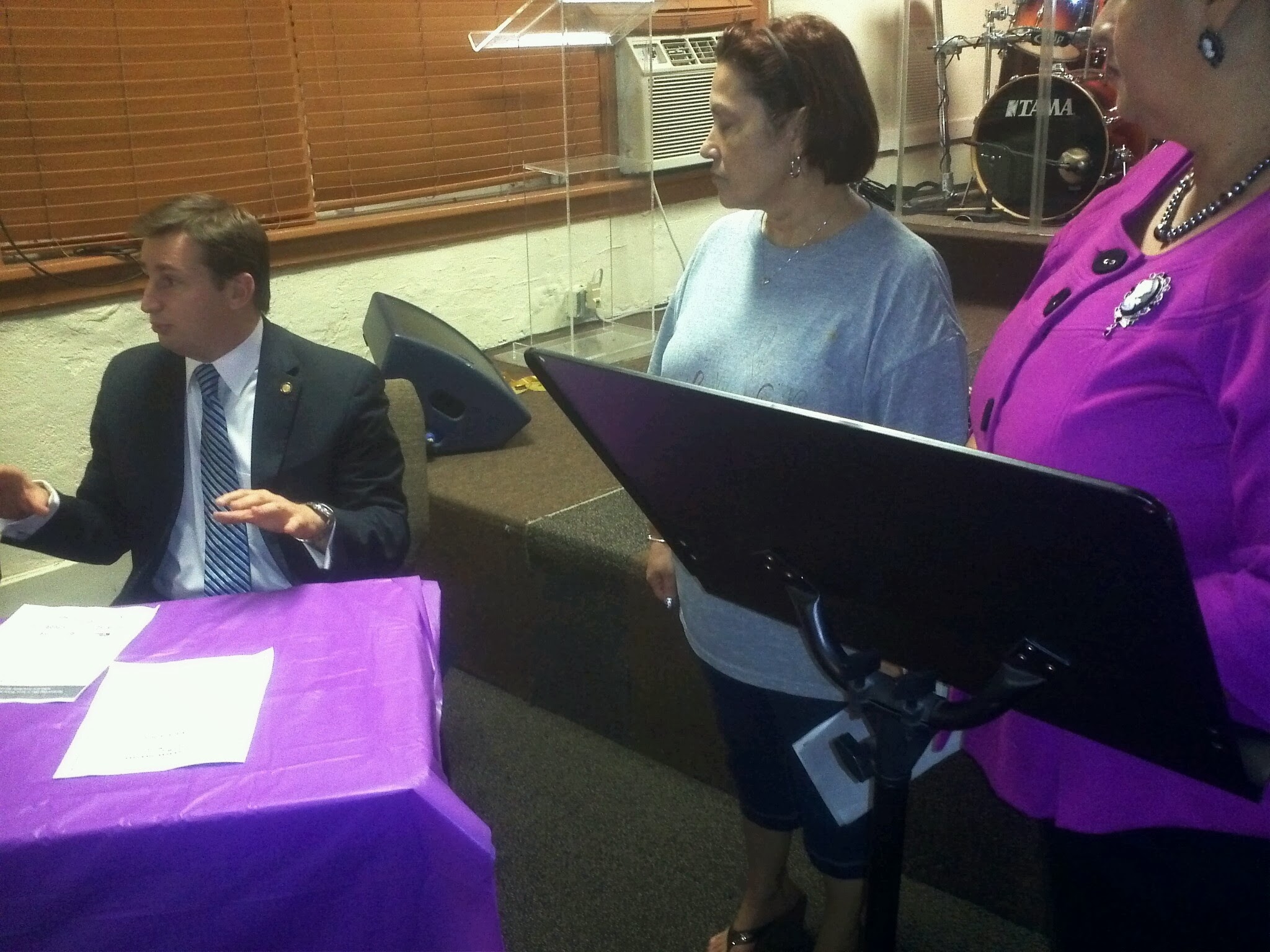 Meeting with Latino leaders last night from Seminole County at Iglesia Vida Nueva, Rep. Jason Broader, Chair of the House Health Innovations Committee, committed to push the Immigrant Health Care HB 7. The bill would eliminate the 5 year wait for lawfully legal immigrant children now required before becoming eligible for federally funded children’s health insurance. Two weeks ago families from Brodeur’s district testifies in his committee that the five year wait was unjust. These families are here legally, pay taxes, work for a living, and should get the same benefits as other citizens. The bill passed the committee unanimously. Passage of the bill into law would add an estimated 25,000 children to the Florida KidCare program.
Last night Brodeur agreed to consider co-sponsoring the bill in the next week, and has talked with House Speaker Will Weatherford urging his support. The bill now goes to the House Health Care Appropriations Committee, Chaired by Rep. Matt Hudson of Naples. If you have relationships in Naples that could support the bill, please contact us. A Senate companion bill SB282 is referred to the Senate Health Policy Committee.
 sunshineadvocacy.com